
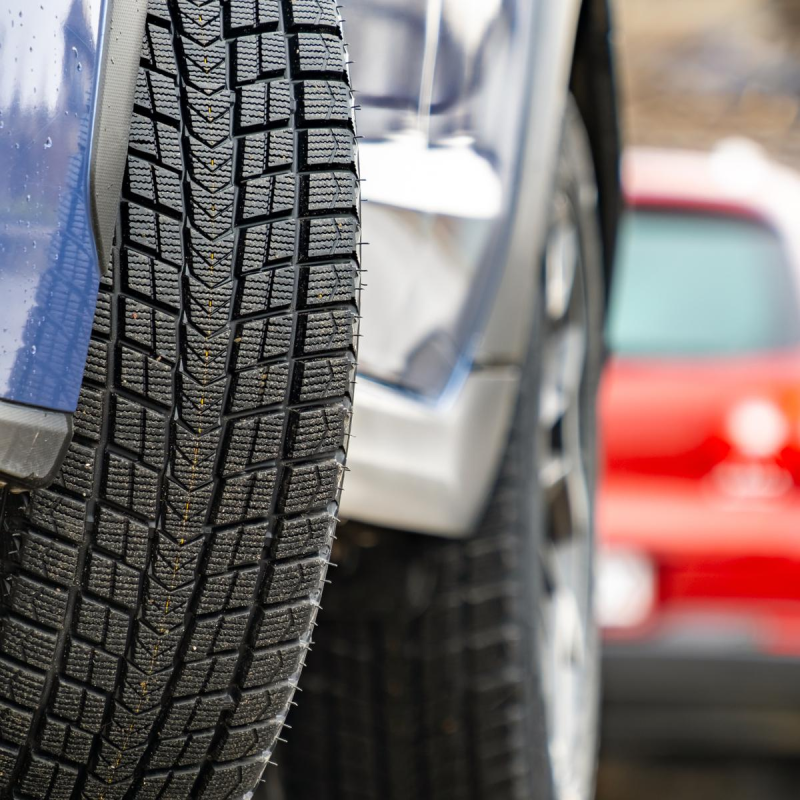
Rubber is so familiar that it rarely invites scrutiny. It grips the road, seals joints, absorbs shock, and flexes repeatedly without failing. These qualities feel inherent, almost natural. In reality, they are the result of a single transformative process that turned an unpredictable material into one of the most reliable substances in modern industry.
That process is vulcanisation.
By fundamentally changing how rubber behaves under heat, stress, and time, vulcanisation made elastomers practical at scale. Its influence extends from everyday products to critical industrial applications, shaping manufacturing in ways that remain just as relevant today.
Rubber before reliability
Natural rubber has been known and used for centuries, particularly in Central and South America. In its raw form, however, it presented serious limitations. It softened and became sticky in warm conditions, turned brittle in the cold, and degraded quickly with use. These properties made it unsuitable for demanding or consistent applications.
As industrialisation accelerated in the nineteenth century, demand grew for flexible materials that could withstand repeated stress and varying environments. Rubber showed promise, but without modification, it could not meet those expectations. The challenge was not discovering rubber, but learning how to control it.
An accidental discovery with lasting consequences
The breakthrough is most often associated with Charles Goodyear, who in the 1830s and 1840s experimented extensively with rubber formulations. Through a combination of persistence and chance, Goodyear discovered that heating rubber with sulfur dramatically altered its properties.
The treated rubber retained elasticity across a wide temperature range, resisted deformation, and became far more durable. What had been unstable and short-lived was now resilient and predictable. The process was later named vulcanisation, after Vulcan, the Roman god of fire.
While the chemistry was not fully understood at the time, the practical implications were immediately clear.
What vulcanisation changes at a molecular level
At a molecular scale, vulcanisation introduces sulfur cross-links between polymer chains in natural rubber. These cross-links prevent the chains from sliding freely past one another when heat or force is applied, while still allowing the material to stretch and recover.
The result is a material that combines flexibility with strength. It resists permanent deformation, maintains elasticity over repeated cycles, and performs consistently under conditions that would destroy untreated rubber.
This balance between mobility and restraint is what gives vulcanised rubber its distinctive performance, and why it became indispensable across so many industries.
Enabling modern manufacturing
Once vulcanisation became widely adopted, rubber moved from novelty to necessity. It enabled the production of reliable hoses, seals, gaskets, belts, and insulation. Most significantly, it made durable tyres possible, supporting the rise of mechanised transport and global logistics.
Industrial machinery also benefited from rubber components that could absorb vibration, reduce wear, and create effective seals. In these contexts, rubber was no longer a weak point but a designed solution.
Vulcanisation allowed rubber to be specified, standardised, and trusted, which in turn made it compatible with large-scale manufacturing and global supply chains.
Evolution rather than replacement
Over time, vulcanisation techniques have evolved alongside advances in polymer science. Synthetic rubbers, alternative curing agents, and tailored cross-linking systems have expanded the range of achievable properties. Heat resistance, chemical compatibility, hardness, and elasticity can now be tuned to suit specific applications.
Despite these refinements, the underlying concept remains the same. Vulcanisation is still about controlling molecular structure to achieve predictable performance. Modern elastomers owe as much to this nineteenth-century discovery as they do to contemporary materials science.
Why vulcanisation still matters
Vulcanisation does not create a new substance from scratch. It takes an existing material and makes it reliable. That distinction is part of its importance.
By transforming rubber into a dependable engineering material, vulcanisation enabled entire industries to function more safely, efficiently, and at greater scale. It is a reminder that some of the most impactful chemical processes are those that solve practical problems quietly, improving performance not through complexity, but through control.
In the context of modern manufacturing and materials supply, vulcanisation remains a foundation rather than a footnote. Its legacy is not confined to history, but embedded in the products and systems that support everyday life.
Looking for specialty chemicals? Browse our offering to find out what we can supply.